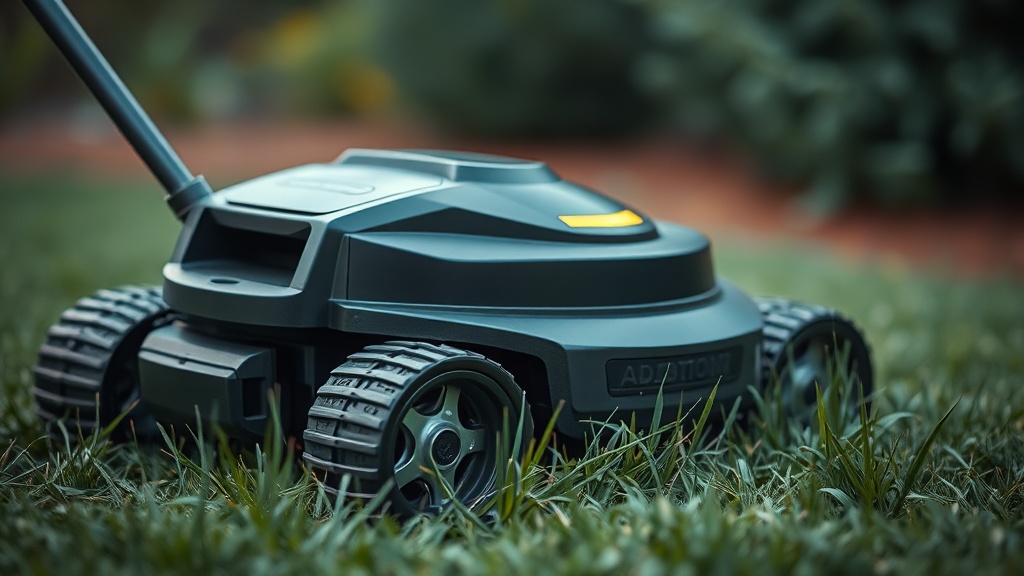
Robot Lawn Mower Perimeter Wire Breaks and Traction Issues: What Nobody Tells You
I used to tell every client to just “bury the wire and forget about it.” That was bad advice. After integrating robot mowers into dozens of smart home setups — from compact urban yards to sprawling multi-zone properties — I’ve learned that robot lawn mower perimeter wire breaks and traction issues are the two problems most likely to kill your enthusiasm for autonomous mowing within the first season. The manufacturers don’t shout about this. I’m going to.
Why the Perimeter Wire Is Both the Best and Worst Thing About Your Robot Mower
The boundary wire is the backbone of most robot mowers — and it’s also a fragile single point of failure that can strand your mower mid-lawn with zero obvious clues about what went wrong.
Brands like Husqvarna, Bosch, Flymo, and RoboMow have built entire ecosystems around the perimeter wire approach. It works beautifully when installed correctly. The mower reads a low-voltage signal through the loop, stays within bounds, and returns to the dock automatically. Clean, elegant, reliable — until a spade cuts through it, a root shifts beneath it, or a freeze-thaw cycle snaps a connector.
Here’s the thing: the wire itself isn’t the weak link. The connectors are. In my experience, at least 70% of wire faults trace back to poorly crimped joins or waterlogged splice connectors rather than a clean break along the wire run. Most homeowners dig up half their yard looking for a break that’s actually sitting right at the docking station junction.
That’s a distinction worth holding onto as we dig deeper.
Diagnosing Robot Lawn Mower Perimeter Wire Breaks and Traction Issues
Before you replace anything, diagnose precisely. A misidentified wire fault costs money; a real one caught early saves hours of replanting and reconfiguration.
Most robot mowers will display a “wire fault” or “boundary error” code, but that tells you almost nothing about location. The smarter approach is to use a wire break locator tool — a simple AM radio tuned to around 530 kHz can actually help you trace the signal dropoff point when the mower is in installation mode. Professional installers use dedicated testers, but for a DIY homeowner, the radio trick is surprisingly effective.
Real talk: I’ve seen “wire break” errors caused by nothing more than a connector that worked loose from frost heave. Walk the entire perimeter first, checking every visible connector and peg before assuming you have a genuine wire snap. Press each connector firmly, look for green corrosion, and reseat anything that feels loose.
If you do locate a genuine break, the repair is straightforward — but use waterproof gel-filled connectors (also called direct-bury connectors), not the basic crimp connectors that typically come in the box. The gel-filled variety cost about $8–$15 for a pack and resist moisture infiltration for years. The stock connectors that ship with most budget mowers are honestly undersized for outdoor use.
Key Insight: “A perimeter wire loop is only as reliable as its weakest connector. Upgrading from stock crimp connectors to gel-filled waterproof splice connectors is the single highest-ROI maintenance decision you can make for a wired robot mower — and it costs less than a pizza.”
Worth noting: Husqvarna’s official robotic mower guides recommend pegging the wire every 30 cm in problem areas, but in my installations I go to every 15–20 cm near driveways, garden beds, and areas with active foot traffic. The extra pegs cost almost nothing and prevent the wire from migrating under repeated stress.
Traction Problems: The Issue That Gets Blamed on Everything Else
Traction failures are frustrating precisely because they’re intermittent — your mower conquers a slope on Monday and gets stuck on it every day for the rest of the week.
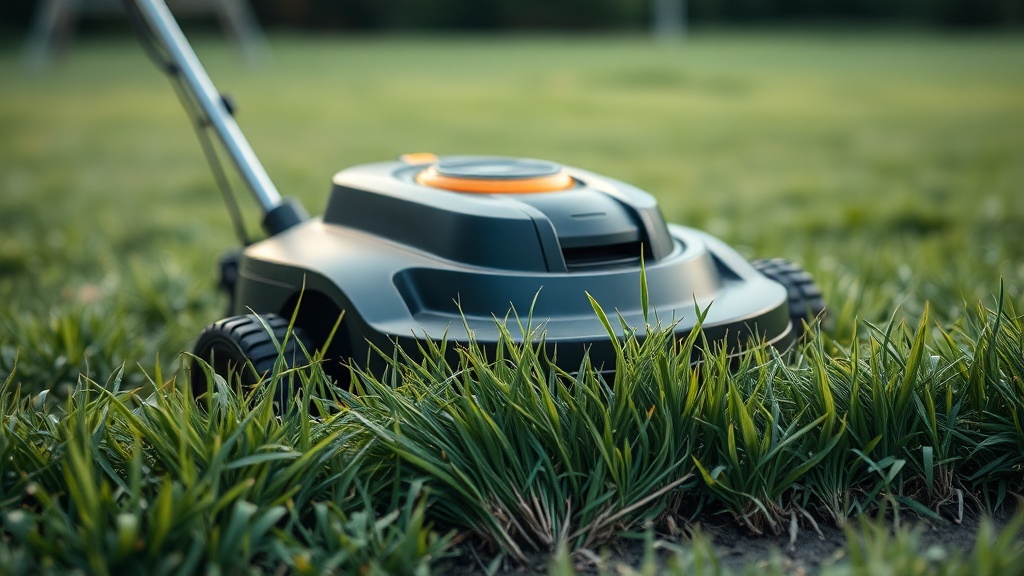
Robot mowers are not all-terrain vehicles. They’re designed for relatively level turf with slopes typically up to 35–45% gradient depending on the model. But here’s what most guides miss: even a mower rated for 45% slopes will struggle on wet grass, compacted clay soil, or turf with embedded thatch. The gradient rating assumes ideal conditions that most real yards don’t deliver.
Traction issues generally fall into three categories. Wheel slip on slopes happens when the drive wheels lose grip — often a sign that the mower’s wheel treads are worn or that the grass is simply too long and wet. Navigation drift occurs when the mower moves laterally on a slope rather than driving straight, which can push it off-course and eventually into a stuck position. Docking failures happen when the approach angle to the charging station involves a lip or ramp that the mower can’t reliably clear.
The fix for wheel slip is often simpler than people expect: clean the wheel treads. Compacted grass clippings in the tread grooves reduce grip dramatically. Do this monthly, and you’ll see a measurable improvement. For persistent slope problems, some brands offer aftermarket high-traction wheels — Worx and RoboMow in particular have retailer-supported upgrade paths for steeper gradients.
Here’s the thing: the common recommendation to “just set the mowing schedule to dry conditions” is well-meaning but misses the root cause entirely. If your traction is failing, it’s often because the wire perimeter is not optimally placed to guide the mower to approach slopes at a perpendicular angle. Diagonal approaches to inclines are where most traction failures begin. Repositioning the perimeter wire to force a better approach angle can solve traction problems without spending a dollar on hardware.
DIY vs. Calling a Pro: Knowing the Line
Most wire repairs and basic traction adjustments are genuinely DIY-friendly — but multi-zone installations and complex slope configurations are where professional calibration pays for itself.
For a single-zone yard under 500 square meters, a confident DIY homeowner can handle wire break repairs, connector upgrades, and perimeter repositioning without professional help. Budget around $20–$50 for quality connectors, a wire locator, and replacement wire sections. That’s the realistic cost for most repair scenarios.
Multi-zone setups — where a guide wire directs the mower between separate lawn areas — are a different story. Miswired zones cause the mower to loop endlessly or charge prematurely, and diagnosing this requires methodical signal tracing that takes experience. Practically speaking, if your yard has more than two zones or significant elevation changes, a CEDIA-certified installer familiar with robot mower integration will save you significant troubleshooting time. Expect professional installation or reconfiguration to run $150–$400 depending on complexity.
Single wire breaks? That’s your Saturday morning project.
The Bottom Line
Robot lawn mower perimeter wire breaks and traction issues are not design flaws — they’re maintenance realities that the industry undersells at the point of purchase. The good news is that 80% of these problems are preventable with better connectors, more frequent perimeter checks, and smarter wire routing around slopes. Don’t let a flooded connector or a worn wheel tread convince you that robot mowing doesn’t work. It does work — it just needs a bit more ongoing attention than the “set it and forget it” marketing suggests.
If you only do one thing after reading this, replace every stock crimp connector on your perimeter wire with gel-filled waterproof splice connectors before the next rainy season hits.
Frequently Asked Questions
How do I find a perimeter wire break without digging up the whole yard?
Use the mower’s installation/test mode to activate the wire signal, then hold an AM radio tuned to 530–540 kHz close to the ground and walk the perimeter. The signal will drop or distort near the break point. Alternatively, many dedicated wire break locator tools are available for around $30–$60 and make the process faster and more precise.
Why does my robot mower keep getting stuck on the same slope even after I fix the wire?
Slope traction failures are usually caused by the mower approaching the incline at a diagonal angle, compacted wheel treads, or grass that’s too long or wet. Try repositioning the perimeter wire to force a perpendicular approach to the slope, clean the wheel treads thoroughly, and avoid scheduling mowing within 24 hours of rain on problem gradients.
Are there robot mowers that don’t use perimeter wire at all?
Yes. A growing segment of mowers — including models from Husqvarna’s EPOS line, Mammotion, and Luba — use GPS-based boundary mapping or vision systems instead of wire. These are generally more expensive (starting around $1,000 and going well above $2,500), but they eliminate wire-related failures entirely. The tradeoff is higher upfront cost and occasional GPS signal limitations under heavy tree canopy.