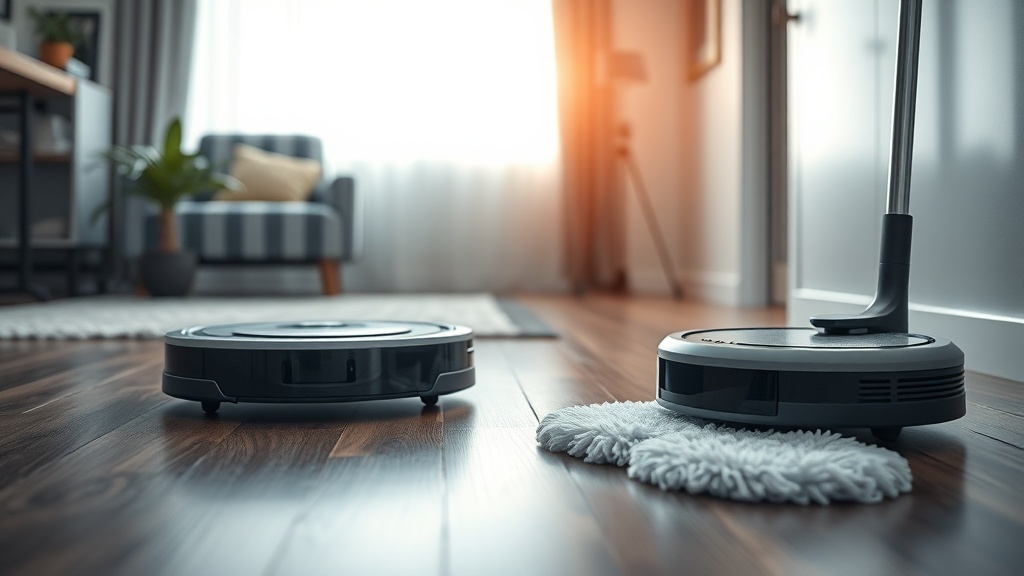
Executive Summary: High-end robot vacuum and mop combos promise fully autonomous floor care, but their long-term maintenance realities are far more demanding than marketing materials suggest. Owners of premium units must budget for recurring consumable costs, firmware dependencies, sensor calibration, and the integration complexity that arises when these devices are embedded into a professionally designed smart home ecosystem.
This guide, authored by a CEDIA Certified Professional Designer and Smart Home Integration Specialist, decodes what truly happens after the honeymoon phase — and how a professional integration approach preserves both performance and investment value.
As a dedicated Smart Home Integration Specialist with CEDIA certification, I have spent years designing, commissioning, and maintaining complex residential technology ecosystems across luxury estates. In that time, one category of devices has generated more long-term service calls and owner frustration than almost any other: high-end robot vacuum and mop combos. Not because these machines are poorly built — many are genuinely impressive feats of engineering — but because the gap between initial marketing promise and long-term maintenance reality is extraordinarily wide. This article addresses that gap with the professional candor that only hands-on field experience can provide.
The conversation around robotic vacuum cleaners has matured significantly. Early models were little more than novelties. Today’s flagship units from brands such as Roborock, iRobot, Dreame, and Ecovacs incorporate laser navigation, AI-powered obstacle avoidance, self-emptying bases, self-washing mop pads, and hot-air drying systems. They are, in every meaningful sense, sophisticated robotic appliances — and sophisticated appliances demand sophisticated upkeep.
Within a professionally integrated smart home, these robots do not operate in isolation. They are networked assets that must coexist with smart home automation protocols, enterprise-grade network infrastructure, and platform-level control systems. Understanding this context is essential before evaluating what “long-term maintenance” actually means for premium robot vacuum and mop combos.
Why “High-End” Does Not Mean “Low-Maintenance”
Contrary to popular belief, premium robot vacuum and mop combos require significantly more active maintenance than entry-level models, due to the greater complexity of their self-cleaning docking stations, sensor arrays, and firmware ecosystems. Owners who neglect this reality face escalating repair costs and degraded performance within 12 to 18 months of purchase.
The consumer electronics industry has masterfully marketed autonomous floor care as a set-it-and-forget-it proposition. Spend $1,500 on a flagship robot, the messaging implies, and your floors care for themselves indefinitely. The reality, as any professional integrator will attest, is far more nuanced.
High-end robot vacuum and mop combos are defined by their multi-function docking stations, which simultaneously empty the dustbin, wash and dry the mop pads, refill the clean water tank, and drain the dirty water reservoir. These stations contain pumps, heating elements, sensors, and fluid pathways — all of which are subject to mineral scale buildup, microbial growth, and mechanical wear. In hard-water regions, the internal tubes of a self-wash dock can calcify significantly within three to four months if descaling routines are ignored.
Furthermore, the brushroll — the primary consumable of any robot vacuum — must be inspected on a weekly basis in homes with pets or long-pile carpet. Hair tangles reduce suction efficiency and place excessive load on the motor. On premium units, a seized brushroll motor can cost $200–$400 to replace out of warranty, a fact conspicuously absent from most product reviews. Side brushes, HEPA filters, mop pads, and rubber seals around the dock all have defined replacement intervals that manufacturers publish but most owners never read.
“The total cost of ownership for a $1,500 robot vacuum over three years — including consumables, replacement parts, and professional cleaning of the dock — frequently exceeds $800 in addition to the purchase price.”
— Smart Home Integration Field Assessment, CEDIA Professional Network, 2024
The Network Infrastructure Dependency Problem
High-end robot vacuum and mop combos are cloud-dependent devices that require a stable, properly segmented network to function reliably. Without enterprise-grade infrastructure, these robots will experience connectivity dropouts, failed cleaning schedules, and app communication failures that owners incorrectly attribute to hardware defects.
This is where my perspective as a professional integrator diverges sharply from that of a consumer technology reviewer. I am trained by CEDIA — the Custom Electronic Design & Installation Association, the global trade body and central authority for the home technology industry. CEDIA-certified designers are required to treat network infrastructure as the non-negotiable foundation of any residential technology project, and robot vacuums are no exception.
Premium robot vacuums rely on 2.4 GHz and 5 GHz Wi-Fi to communicate with cloud servers, receive firmware updates, transmit map data, and respond to voice commands via Google Assistant, Amazon Alexa, or Apple HomeKit. In a home with a congested or poorly managed wireless environment — dozens of IoT devices sharing the same channel, a consumer-grade router positioned centrally in a 6,000-square-foot estate — connectivity problems are inevitable.
Professional installations address this through VLAN (Virtual Local Area Network) segmentation, which isolates IoT devices, including robot vacuums, onto their own network partition, preventing their traffic from interfering with high-bandwidth media streams or sensitive personal data. Additionally, enterprise-grade managed switches and multi-access-point wireless systems ensure that the robot’s dock, wherever it is positioned, maintains a strong and consistent signal. Homes that invest in this infrastructure report a dramatically lower rate of robot vacuum “connectivity issues” — typically the number one complaint in long-term user reviews.
Furthermore, Power over Ethernet (PoE) technology, widely used for IP security cameras and touch panels in professionally integrated homes, informs how integrators think about device placement and cable infrastructure. While robot vacuum docks are not PoE devices, the discipline of planning dedicated power drops and data runs to every device location is directly applicable and prevents the ad-hoc extension cord arrangements that compromise both safety and aesthetics in luxury interiors.
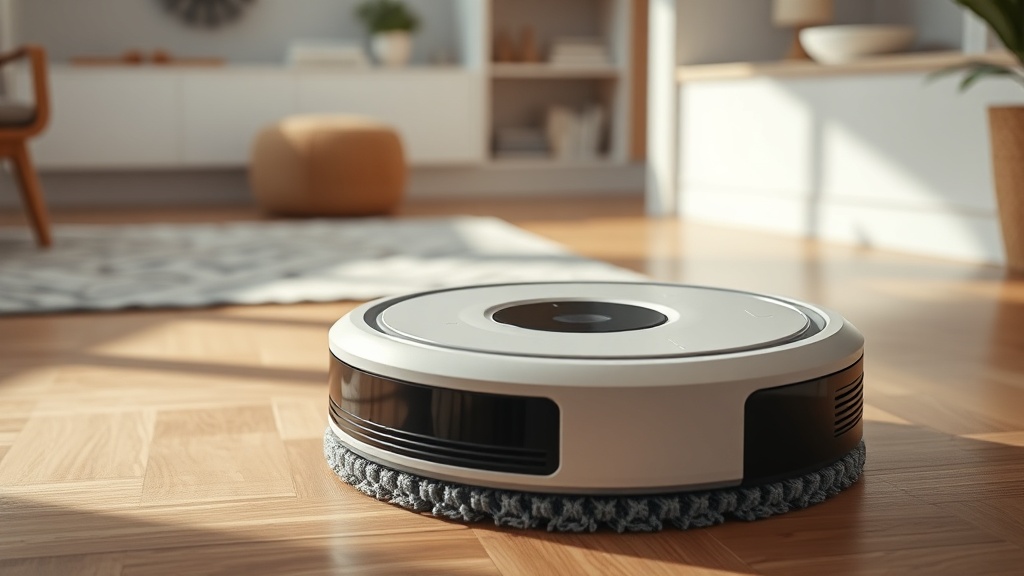
Firmware, Software, and the Planned Obsolescence Risk
One of the most underappreciated long-term maintenance realities of high-end robot vacuum and mop combos is their dependency on manufacturer cloud services and firmware continuity. When a brand discontinues server support for an older model, the robot effectively loses its “smart” functionality, reducing a $1,500 device to a basic, schedule-less vacuum.
This risk is real and documented. Several brands have retired cloud support for robot vacuum models fewer than five years old, rendering their proprietary app controls non-functional. The core suction and navigation may continue to operate in a degraded local mode, but the advanced scheduling, room-specific zoning, consumable tracking, and mop control features — the very features that justify the premium price — cease to work.
Professional integrators mitigate this risk by selecting brands with demonstrable commitments to longevity and those that support integration with platform-agnostic control systems. The emergence of Matter, the unified, IP-based connectivity standard developed by the Connectivity Standards Alliance to improve interoperability between smart home brands, is a significant development. As robot vacuum manufacturers begin adopting Matter and its companion protocol Thread — a low-power, wireless mesh networking protocol providing high reliability and low latency — devices will become less dependent on any single manufacturer’s cloud infrastructure. However, as of 2025, full Matter integration for robot vacuums remains nascent, and professional guidance is essential for navigating this transition intelligently.
Within platforms like Control4, Crestron, or Savant — the professional-grade control systems preferred by smart home integrators over consumer apps — robot vacuums can be triggered by automation events rather than cloud polling. For instance, a Control4 driver can command the robot to begin cleaning the kitchen 15 minutes after the morning wake-up routine activates, without relying on the manufacturer’s cloud server to relay that command. This local-processing approach dramatically improves response time and insulates the automation from cloud outages.
Consumable Costs: The True Long-Term Budget
The annual consumable cost for a high-end robot vacuum and mop combo — including replacement filters, brushrolls, mop pads, dock cleaning solutions, and water treatment tablets — typically ranges from $180 to $350 per year, a figure rarely disclosed prominently by retailers or manufacturers.
Below is a structured breakdown of typical consumable maintenance for a flagship robot vacuum and mop combo in a mid-to-large luxury residence:
| Consumable / Service Item | Replacement Frequency | Estimated Annual Cost | Consequence If Neglected |
|---|---|---|---|
| HEPA Filter | Every 2–3 months | $40–$80 | Reduced suction, allergen re-emission |
| Main Brushroll | Every 6–12 months | $25–$60 | Motor strain, poor deep cleaning |
| Side Brushes (pair) | Every 3–4 months | $15–$30 | Missed edges, scratched baseboards |
| Mop Pads | Every 3–6 months | $20–$50 | Bacterial growth, streaking on floors |
| Dock Descaling Solution | Monthly (hard-water areas) | $18–$35 | Tube blockages, pump failure |
| Dust Bag (auto-empty dock) | Every 4–8 weeks | $30–$60 | Dock overflow, dust re-release |
| Battery Replacement | Every 2–3 years | $50–$120 (amortized) | Shortened runtime, incomplete cycles |
| Total Estimated Annual Maintenance | $198 – $435 / year |
These figures are consistent with what I encounter in the field when auditing smart home systems for new clients. The takeaway is unambiguous: the purchase price is not the total cost of ownership. A $1,200 robot vacuum costing $350 per year in maintenance over three years represents a $2,250 investment — a number that demands the same due-diligence as any other significant home technology purchase.
Sensor Calibration, Navigation Maps, and Structural Changes
High-end robot vacuum and mop combos create persistent navigation maps of the home’s floor plan that are invalidated by furniture rearrangement, renovation work, or the addition of new flooring types. Re-mapping and recalibration are ongoing maintenance tasks that professional smart home integrators account for in their service agreements.
Modern flagship robots use LiDAR (Light Detection and Ranging) or structured-light 3D sensors to create precise, centimeter-accurate floor maps. These maps are stored both on-device and in the cloud, and they form the basis for all zone-based cleaning instructions. When a homeowner remodels a room, adds an area rug, repositions furniture clusters, or installs new flooring — events that are entirely routine in luxury estates — the stored map must be rebuilt from scratch.
This re-mapping process is not difficult, but it is time-consuming and must be done correctly to re-establish all previously defined cleaning zones, no-go areas, and room labels. In professionally integrated homes where the robot’s cleaning schedule is embedded into a broader smart home energy management or “Good Night” routine via a platform like Crestron or Savant, these map changes require corresponding updates to the automation logic. Failing to synchronize these systems results in the robot being dispatched to a reconfigured room and encountering obstacles it is not mapped to navigate.
Additionally, the obstacle-avoidance cameras and infrared cliff sensors require periodic cleaning. A film of dust on a cliff sensor will cause the robot to believe it is permanently at the edge of a staircase, halting all operations. This is one of the most common service calls I attend that could have been avoided with a monthly five-minute maintenance wipe-down of all external sensors with a dry microfiber cloth.
Integrating Robot Vacuums into a CEDIA-Standard Smart Home
When robot vacuum and mop combos are properly integrated into a CEDIA-standard smart home ecosystem — with professional documentation, network segmentation, and platform-level control — their reliability increases substantially and their maintenance burden becomes predictable and manageable rather than reactive and disruptive.
As a CEDIA Certified Professional Designer, I follow rigorous standards for documentation, including wiring schematics, rack elevations, and device inventories. Every networked device in the home — including robot vacuums and their docking stations — is catalogued with its MAC address, IP reservation, firmware version, and scheduled maintenance dates. This systematic approach is the difference between reactive troubleshooting and proactive lifecycle management.
Professional integrators also leverage Remote Management Systems (RMS) to monitor the operational health of the home’s technology ecosystem. While RMS platforms are most commonly associated with AV equipment and lighting controllers, forward-thinking integrators extend this monitoring to smart appliances. Connectivity anomalies, failed cleaning jobs logged in the robot’s cloud history, and unusual power consumption patterns from the dock’s outlet can all serve as early warning indicators that maintenance is due or a component is failing.
The convergence of HVAC, security, lighting, audio-visual, and energy management systems within a professionally integrated home creates a rich automation context that robot vacuums can participate in meaningfully. For example:
- Presence-Aware Scheduling: When the home security system confirms the family has left via geofencing, the robot begins its full-home cycle automatically — no cloud delay, no manual trigger.
- Post-Event Cleaning: After a dinner party ends and the last guest leaves (confirmed by access control logs), the kitchen and dining room zones are dispatched for mopping.
- Energy Optimization: Smart Home Energy Management Systems (SHEMS) can schedule the robot’s high-power dock operations — heating elements for mop drying — during off-peak electricity tariff windows or when the home’s solar battery storage is at capacity.
- Lighting Coordination: Lutron-controlled lights in the robot’s path can be raised to full brightness during cleaning and returned to the current scene upon completion, improving the robot’s camera-based obstacle detection.
This level of integration is not achievable through consumer apps alone. It requires the layered architecture of professional control platforms, properly documented system design, and the expertise of a certified integrator who understands both the smart home ecosystem and the specific API capabilities of the robot vacuum brand in question.
Cybersecurity: An Overlooked Maintenance Dimension
High-end robot vacuum and mop combos are internet-connected cameras and microphones operating inside the most private spaces of a home, making cybersecurity — specifically firmware update discipline and network isolation — a critical and ongoing maintenance responsibility.
This is a dimension of robot vacuum maintenance that is almost never discussed in consumer media, yet it is one I address in every client briefing. Flagship robot vacuums contain wide-angle cameras for obstacle avoidance, always-on microphones for voice command reception, and continuous Wi-Fi uplinks to manufacturer cloud servers. This combination represents a significant privacy surface that requires active management, not passive trust.
The professional response, per CEDIA cybersecurity best practices, is twofold. First, VLAN segmentation places all robot vacuums and IoT devices on an isolated network segment that cannot directly communicate with computers, NAS drives, or other sensitive devices on the primary LAN. Second, firmware update management ensures that security patches published by manufacturers are applied promptly. According to research published in academic cybersecurity literature, IoT devices running outdated firmware represent one of the most commonly exploited attack vectors in residential network breaches.
Professional integrators who provide ongoing support contracts include IoT device firmware audits as a standard service item, typically performed quarterly. This ensures that the robot vacuum — like every other networked device in the home — remains current, secure, and compliant with evolving privacy standards.
Practical Owner Maintenance Schedule: A Professional Recommendation
Based on field experience across hundreds of luxury residential installations, a structured weekly, monthly, and quarterly maintenance schedule is the single most effective way to extend the operational lifespan of a high-end robot vacuum and mop combo and avoid costly emergency repairs.
Here is the maintenance cadence I provide to every client who incorporates a premium robot vacuum into their integrated smart home:
Weekly Tasks (5–10 minutes): Remove and clean the brushroll of any hair tangles. Wipe the robot’s sensors — cliff sensors, obstacle cameras, and the LiDAR turret — with a dry microfiber cloth. Empty the dock’s dirty water tray if it does not drain automatically. Check the dock’s clean water reservoir and refill as needed.
Monthly Tasks (15–20 minutes): Run the manufacturer’s dock self-clean cycle with the recommended descaling solution. Remove and rinse the dock’s fluid pathways using the prescribed maintenance mode. Inspect mop pads for discoloration or odor and replace if necessary. Review the robot’s maintenance log in the companion app for any flagged component warnings. Confirm that the robot’s firmware is current.
Quarterly Tasks (30–45 minutes or via professional service): Replace HEPA filters. Replace side brushes. Perform a full map rebuild if any significant furniture changes have occurred. Audit the robot’s network connectivity and IP reservation via the home’s managed switch dashboard