Executive Summary
- OEM filters are precision-engineered to match a purifier’s static pressure and motor torque, ensuring optimal airflow (CFM) and long-term motor health.
- Third-party HEPA filters frequently introduce airflow restrictions that degrade PM2.5 and VOC sensor accuracy, corrupting smart automation logic.
- Skewed pressure-drop data caused by non-OEM media can trigger premature filter-replacement alerts and falsify smart-dashboard air quality readings.
- CEDIA-certified IAQ strategy demands hardware-software coherence — and that coherence begins at the filter level.
Effective Smart Home Air Quality Management — the disciplined integration of filtration hardware, real-time sensor feedback, and automated HVAC or standalone purification logic — requires a granular understanding of how every physical component interacts with its controlling software. As a CEDIA Certified Professional Designer, I routinely audit installations where automation platforms perform flawlessly on paper yet deliver substandard indoor air quality in practice. In the majority of those cases, the root cause is not a misconfigured scene or a faulty Zigbee node. It is the filter.
Why Filter Selection Is a Systems Engineering Decision
Choosing between an OEM and a third-party HEPA filter is not a purchasing decision — it is a systems engineering decision that directly determines whether your smart purifier performs within its designed operating envelope or outside it, degrading every downstream automation that depends on accurate airflow and sensor data.
The term HEPA (High-Efficiency Particulate Air) describes a filtration standard, not a single product. Any filter marketed as HEPA must, by definition, capture 99.97% of airborne particles as small as 0.3 microns — the most penetrating particle size for fibrous media. That standardized capture efficiency, however, says nothing about the pressure drop the media imposes on the fan motor, which is where OEM and third-party products diverge critically.
OEM (Original Equipment Manufacturer) filters are specifically engineered to match the static pressure tolerance and motor torque specifications of a particular air purifier model. The filter manufacturer and the purifier manufacturer collaborate — or are the same entity — to ensure that the resistance the filter imposes falls precisely within the range the blower motor was designed to overcome. This tight coupling is the foundation of every performance claim printed on the product box: its rated CFM (Cubic Feet per Minute) clean-air delivery, its noise floor at each fan speed, and its projected filter-service interval.
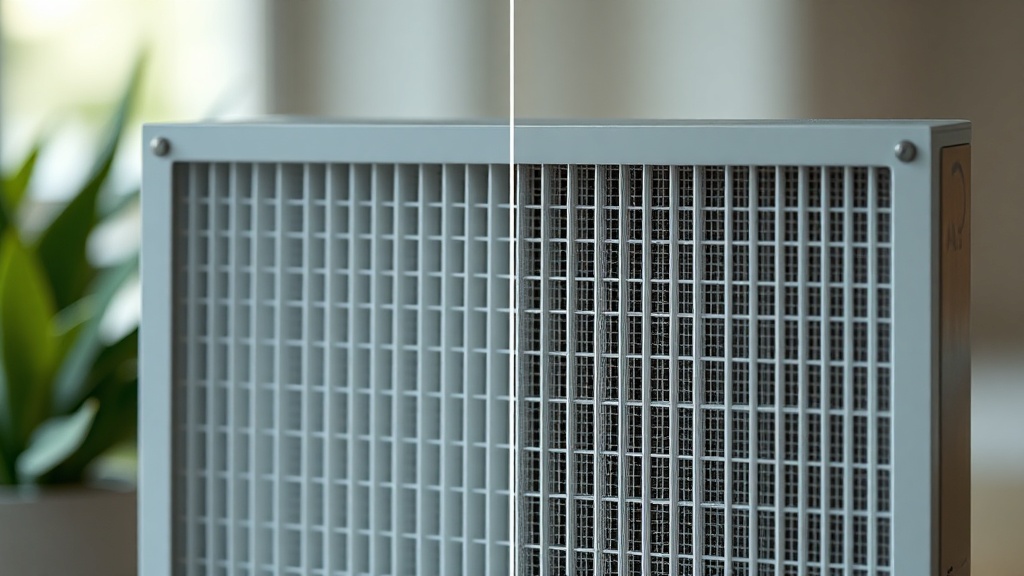
Third-party filters, even those legitimately meeting the 99.97% HEPA capture threshold, often utilize different fiber densities, pleat geometries, and media thicknesses to achieve that capture rating. These manufacturing variations translate directly into altered static pressure curves. A filter that is denser than the OEM equivalent will restrict airflow; one that is less dense may allow higher CFM but at reduced filtration depth. According to verified industry knowledge, these media density differences produce significant, measurable variations in delivered CFM — variations that cascade through every layer of a smart home’s IAQ automation stack.
The CFM Cascade: How Airflow Restriction Undermines Smart Automation
When a non-OEM filter restricts airflow below a purifier’s design CFM, the smart home’s automation engine — which depends on stable, predictable air throughput to correlate fan speed with real-time PM2.5 readings — begins operating on false assumptions, triggering longer run cycles, inflated energy consumption, and degraded sensor response times.
Modern smart home ecosystems rely on precise sensor data — particularly PM2.5 particulate counts and VOC concentration readings — to execute automated fan speed adjustments and maintain programmed indoor air quality setpoints. These automation rules are calibrated against a specific airflow rate. When a high-resistance third-party filter cuts that rate, the volume of air passing over the PM2.5 laser sensor per unit of time drops. The sensor’s sampling environment stagnates. A real-world particulate event — cooking smoke, an opened window during a high-pollen day — registers late or not at all, and the automation response is delayed accordingly.
The consequences compound at the motor level. Excessive airflow restriction forces the blower to work against increased back-pressure, generating additional heat. As verified engineering data confirms, this elevated thermal load accelerates bearing wear and winding degradation, leading to premature motor failure in smart purification units. A $30 filter substitution can precipitate a $300–$600 motor replacement or full unit replacement within 18–24 months of installation — an economic outcome that negates years of filter-cost savings.
Sensor Integrity and the Filter Life Algorithm Problem
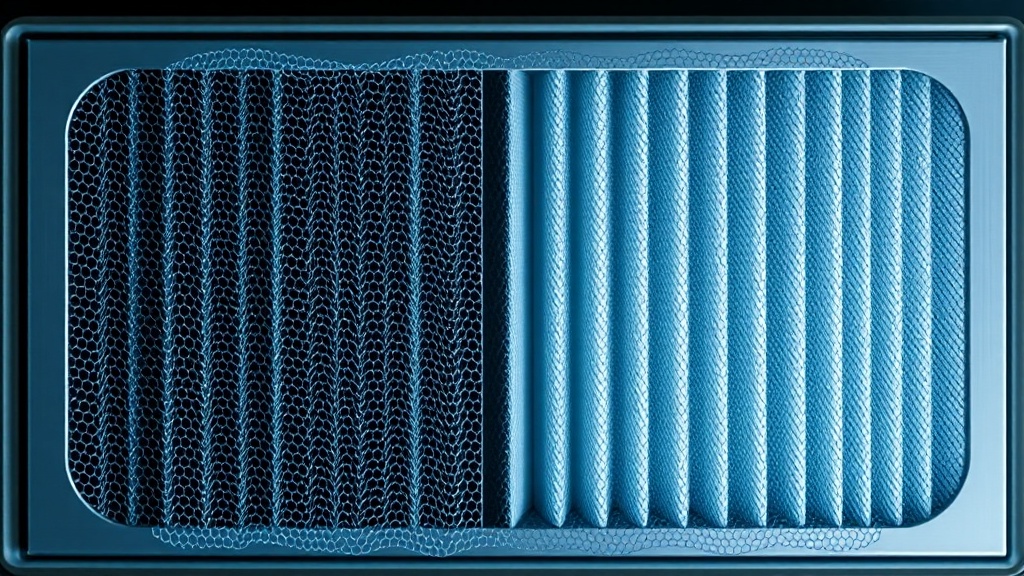
Many smart air purifiers calculate remaining filter life using pressure-drop sensors or motor RPM telemetry — algorithms that are factory-calibrated for OEM media. A third-party filter with incorrect density skews these inputs, producing either dangerously late or chronically premature replacement alerts and corrupting the air quality data displayed on your smart home dashboard.
This is one of the most underappreciated failure modes in smart IAQ deployments. The filter life indicator on a premium smart purifier is not a simple timer. It is a dynamic algorithm ingesting motor current draw, fan RPM, and in many cases a dedicated pressure-differential sensor positioned across the filter media. The algorithm’s baseline — its definition of “normal” resistance at a given fan speed — was established using the OEM filter during factory validation.
Introduce a third-party filter that is 15% denser than the OEM part, and the algorithm interprets the elevated resistance as a partially loaded filter from day one. The unit may display a “replace filter” warning within weeks of installation on a brand-new cartridge, because the pressure drop it measures has already crossed the threshold the factory associated with an end-of-life filter. Conversely, a less dense third-party filter produces anomalously low resistance readings, and the algorithm may never trigger a replacement alert even after the media has absorbed its full capacity of particulates and VOCs. In either scenario, your smart home dashboard is reporting a fiction, and the automation decisions built on that data — adjusted fan speeds, HVAC integration commands, air quality scores shared with occupant health apps — are equally fictitious.
“Indoor air quality sensor accuracy is only as reliable as the mechanical system delivering air to that sensor. Filter media that falls outside the designed operating parameters of a purifier is, functionally, a data corruption event.”
— CEDIA Certified Professional Design Principle, IAQ Integration Framework
For a broader perspective on building a resilient, sensor-accurate IAQ architecture from the ground up, our smart home implementation strategy hub covers the full lifecycle of system design, from component selection through long-term maintenance protocols.
OEM vs. Third-Party HEPA Filters: A Technical Comparison
The table below consolidates the critical performance and integration variables that differentiate OEM and third-party HEPA filters within a smart home IAQ ecosystem, enabling specifiers and end-users to make fully informed procurement decisions.
| Evaluation Criteria | OEM Filter | Third-Party Filter |
|---|---|---|
| HEPA Capture Standard | 99.97% at 0.3 microns (certified) | 99.97% at 0.3 microns (variable verification) |
| Static Pressure Match | Factory-validated for model-specific motor torque | Generic; often deviates from design spec |
| Delivered CFM Accuracy | Within rated spec (±5%) | Can vary significantly; up to 20–30% reduction |
| Filter Life Algorithm Accuracy | Calibrated; alerts are reliable | Skewed pressure-drop input; early or late alerts |
| PM2.5 / VOC Sensor Response | Fast and accurate; stable airflow over sensor | Delayed; stagnant air pockets reduce sensitivity |
| Motor Thermal Load | Within design envelope; normal operating temps | Elevated; accelerates bearing and winding wear |
| Smart Dashboard Data Integrity | Accurate real-time IAQ reporting | Potentially corrupted; unreliable automation triggers |
| Long-Term Cost of Ownership | Higher per-unit cost; lower system replacement risk | Lower per-unit cost; elevated motor failure risk |
| CEDIA IAQ Integration Suitability | Fully compatible with cohesive IAQ strategy | Introduces systemic variables; not recommended |
The CEDIA Professional’s IAQ Integration Mandate
CEDIA-certified professional designers are trained to build cohesive Indoor Air Quality strategies that unify standalone smart purifiers with whole-home HVAC platforms — a methodology that depends entirely on every hardware component, including filtration media, operating within validated specifications.
According to ASHRAE’s technical resources on indoor air quality, maintaining precise airflow rates across filtration systems is a foundational requirement for achieving ASHRAE 62.2 ventilation targets in residential settings. When a smart purifier’s delivered CFM drops due to an over-restrictive third-party filter, the integrated system — which may be calculating whole-home air changes per hour (ACH) based on the purifier’s rated output — begins operating below its ventilation design target without triggering any visible alarm.
Professional CEDIA designers prioritize the integration of HVAC and standalone purification to create a cohesive Indoor Air Quality (IAQ) strategy. This means specifying not just the purifier platform and the automation controller, but the exact consumable components — including filter part numbers — that were validated during system commissioning. A client who later substitutes an unvetted third-party filter has effectively re-commissioned their system with an untested variable, voiding any performance baseline established during installation.
The professional’s obligation extends to client education. Homeowners must understand that a smart IAQ system is not modular in the way a consumer electronics stack might be. The purifier, its motor, its sensor array, its filter media, and the automation logic governing all of the above form a single, interdependent system. Introduce a component the system was not designed for, and you introduce unpredictability at every level.
FAQ
Does using a third-party HEPA filter void my smart purifier’s warranty?
In most cases, yes — or at minimum, it provides grounds for the manufacturer to deny service claims related to motor failure or sensor malfunction. Because OEM filters are engineered to the specific static pressure and motor torque specifications of the unit, damage attributable to airflow restriction caused by a non-OEM filter is typically classified as user-induced wear rather than a manufacturing defect. Always verify your purifier’s warranty terms before substituting filter media, particularly in units whose filter life algorithms are calibrated to OEM pressure-drop baselines.
Can a third-party filter actually damage my smart purifier’s PM2.5 sensor?
Directly damaging the sensor is rare, but degrading its accuracy and operational lifespan is common. When airflow restriction reduces the volume of air moving over the laser-based PM2.5 sensor, particles settle rather than passing through the detection chamber in the designed quantity and velocity. This altered particle flow can allow particulate accumulation on the sensor lens over time, causing baseline drift. More immediately, stagnant air around the sensor delays the detection of real air quality events, causing your smart home automation to respond late — or not at all — to genuine PM2.5 and VOC spikes.
How do I verify that my current filter is performing within the OEM’s intended CFM specification?
The most reliable consumer-accessible method is to compare the purifier’s reported motor RPM or fan speed at a fixed setting across an OEM filter (when new) and any replacement filter under evaluation. If the unit must run at a visibly higher fan speed to reach the same PM2.5 setpoint, or if the motor noise increases noticeably at equivalent speed settings, excess airflow restriction is the likely cause. For a more rigorous assessment, a handheld anemometer placed at the purifier’s exhaust grille can measure actual CFM output. A reading materially below the manufacturer’s rated CFM at a given speed setting confirms that the filter media is imposing above-specification static pressure.