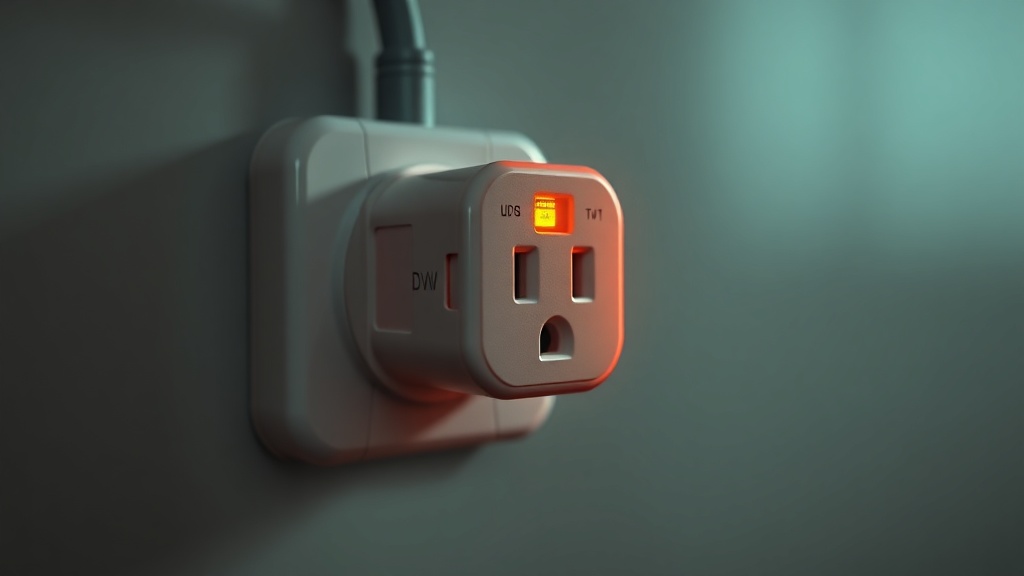
Executive Summary: This technical guide examines the mechanics behind smart plug relay clicking noise (dB) and failure rates after power surges. Drawing on verified engineering data and CEDIA-certified field experience, we analyze why smart plugs produce audible clicks, what decibel range is considered normal, how power surges trigger permanent hardware failure through contact welding and MOV degradation, and what professional mitigation strategies can extend device lifespan in residential smart home deployments.
Why Smart Plugs Click: The Electromechanical Relay Explained
Smart plugs produce an audible click because they use electromechanical relays — physical switches that open and close an electrical circuit using electromagnetic force. This mechanical action is the direct cause of the clicking sound most users hear during on/off commands.
To understand the electromechanical relay — a switching device that uses an electromagnet to physically move a conductive contact arm to complete or break an electrical circuit — is to understand the fundamental design choice that drives smart plug behavior. When a user issues a command through an app, voice assistant, or automation routine, the smart plug’s microcontroller sends a small current through a coil inside the relay. This energized coil generates a magnetic field that physically pulls or releases a spring-loaded metal contact arm. The moment that contact snaps into place or retracts, the mechanical impact produces the distinctive audible click that is a normal characteristic of virtually every consumer-grade smart plug on the market today.
This is not a defect. It is physics. The relay design has been the dominant choice in consumer smart plugs for decades because it provides a true galvanic isolation — a complete physical break in the circuit — which is inherently safer and more energy-efficient at idle than alternative solid-state approaches. For homeowners building a long-term smart home strategy, understanding this distinction helps set realistic expectations about device behavior and guides smarter product selection for noise-sensitive environments.
Decibel Levels: How Loud Is a Smart Plug Click?
A standard smart plug relay click registers between 40 dB and 60 dB at close range, comparable to a quiet conversation or ambient office noise. The exact level varies based on relay model, housing construction, and the acoustic properties of the installation environment.
The 40 dB to 60 dB range captures the majority of consumer smart plugs currently available, but the perceived loudness in a real-world setting is influenced by several compounding variables. First, housing density plays a critical role: a thicker, denser plastic enclosure acts as an acoustic dampener, absorbing the mechanical vibration before it radiates outward as sound. Budget-tier plugs with thinner shells will consistently sound louder and sharper than premium models built to tighter tolerances.
Second, the relay form factor matters significantly. Smaller, low-profile micro-relays produce a higher-pitched, sharper click that can feel more jarring than the lower-pitched click of a larger relay — even at the same measured decibel level. Third, and critically overlooked by most consumers, is the installation surface. A smart plug inserted into an outlet mounted in a hollow stud bay within a drywall partition can create a resonance chamber effect, amplifying the click sound through the wall structure and making it perceptible in adjacent rooms. This is a common complaint in bedroom installations and home theater setups that professionals must anticipate during system design.
For context, 40 dB is roughly equivalent to a library or quiet rural area at night, while 60 dB approaches the level of a normal conversational exchange at arm’s length. The click itself is transient — lasting only a fraction of a second — which means it is rarely disruptive in living areas, but can be genuinely problematic in master bedrooms with automated overnight schedules or in acoustically treated media rooms.
Power Surges and Contact Welding: The Primary Failure Mechanism
Power surges cause smart plug failure primarily through “contact welding,” a phenomenon where high voltage arcs across relay contacts and fuses them permanently in the closed position, rendering the device unable to switch off regardless of software commands.
The term contact welding describes the condition where a voltage transient — a brief, intense spike above the nominal line voltage — generates an electrical arc across the small air gap between open relay contacts. The energy of this arc is sufficient to melt and fuse the metal contact surfaces together, effectively creating a permanent bond. The result is a smart plug that is irreversibly locked in the ON state. The controlling software may indicate the device is off, but the load continues to receive power. This represents both a safety hazard and a complete functional failure requiring immediate replacement.
“Inrush current from connected devices such as LED drivers or motors can be up to 100 times the steady-state operating current, stressing relay contacts more severely than many power surge events.”
— Verified Engineering Data, Smart Plug Relay Stress Analysis
This data point is critical and frequently misunderstood by consumers and even some integrators. Many homeowners assume that a surge from the utility grid is the only threat to relay contacts, but the inrush current generated by the device being controlled is often the more persistent and cumulatively damaging stress factor. Every time an LED driver or a motor-driven appliance is switched on through a smart plug, that 100x current spike flows through the relay contacts for a few milliseconds. Over thousands of switching cycles, this repeated mechanical and thermal stress causes pitting, erosion, and ultimately carbon buildup on the contact surfaces.
MOV Degradation and the Hidden Failure Curve
Smart plugs contain a Metal Oxide Varistor (MOV) as their primary surge protection component, but this device has a finite energy absorption capacity measured in Joules. After multiple surge events, the MOV degrades and the plug loses its ability to protect itself or connected devices.
The Metal Oxide Varistor (MOV) is a voltage-dependent resistor that clamps transient overvoltages by diverting excess energy away from the circuit. Each surge event consumes a portion of the MOV’s total energy absorption rating. A typical consumer smart plug MOV may be rated anywhere from 70 to 200 Joules. A single significant surge event — such as a nearby lightning strike on the distribution system or a large motor cycling off — can consume a substantial portion of that budget in a single event.
The insidious aspect of MOV degradation is that it is entirely invisible without specialized test equipment. The plug continues to function normally for switching and control purposes, but its surge protection capability is progressively diminished or entirely eliminated. This creates a false sense of security: the homeowner believes the device is protected when it is, in fact, operating with no meaningful surge defense. Subsequent surge events then reach the relay contacts and control circuitry directly, dramatically increasing the probability of contact welding, carbon buildup, and complete circuit failure.
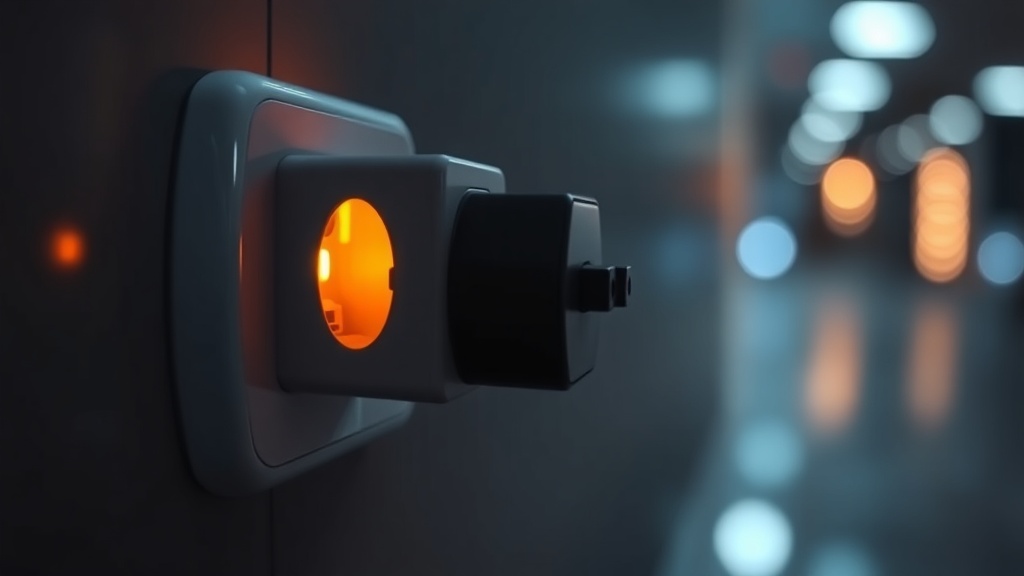
Carbon buildup on relay contacts, as noted in verified engineering data, increases electrical resistance at the contact point. Higher resistance means more heat generated during switching events. Sustained thermal stress can degrade the surrounding insulating materials within the plug body, creating conditions that significantly elevate the risk of localized ignition. This is why smart plugs showing signs of discoloration on the housing, a burning smell, or a “sticky” relay behavior — where the click audibly occurs but the connected load does not receive power — must be decommissioned and replaced immediately.
Solid-State Relays: The Silent Alternative and Its Trade-offs
Solid-state relays (SSRs) operate at 0 dB with no moving parts, but are rarely implemented in consumer smart plugs due to higher manufacturing costs and the engineering challenge of managing heat dissipation at residential current loads.
A solid-state relay (SSR) achieves circuit switching through semiconductor components — typically thyristors or TRIACs — rather than physical moving contacts. Because there are no moving parts, the operation is completely silent, switching speeds are faster, and there are no contacts to weld or erode. According to the Institute of Electrical and Electronics Engineers (IEEE), solid-state switching devices offer significantly longer theoretical operational lifespans measured in switching cycles compared to electromechanical equivalents under equivalent load conditions.
However, the trade-offs are substantial for the consumer market. SSRs generate considerably more heat during normal operation than electromechanical relays, requiring adequate thermal management — heatsinking or active cooling — that complicates the compact form factor of a wall plug. They are also more expensive to manufacture per unit, which conflicts with the price sensitivity of the consumer smart home segment. For these reasons, SSR-based smart plugs remain a niche professional-grade product rather than a mainstream offering, though they represent the correct technical solution for noise-sensitive deployments such as master bedroom lighting control or audiophile-grade home theater environments.
Professional Mitigation Strategies and Integration Best Practices
Protecting smart plugs from surge-related failure requires a layered defense strategy: whole-home surge protection at the service panel, point-of-use surge suppressors with high Joule ratings, and deliberate relay load management to minimize contact stress over time.
As a CEDIA Certified Professional Designer, the mitigation framework I apply in residential installations follows a structured hierarchy. The first and most important layer is a whole-home surge protection device (SPD) installed at the main electrical panel. These Type 1 or Type 2 rated devices, compliant with the National Electrical Code (NEC) requirements, clamp large-magnitude surges before they propagate through the branch circuits of the home. This single investment provides the highest return in terms of protecting all downstream smart home hardware.
The second layer is a high-quality point-of-use surge suppressor with a Joule rating of 1,000 or greater positioned between the wall outlet and the smart plug. This provides targeted protection for specific device clusters — entertainment centers, home office workstations, or smart home hub locations — where multiple intelligent devices are concentrated.
The third layer is load management discipline: never connect inductive loads such as refrigerator compressors, HVAC units, vacuum motors, or large power tools to a standard consumer smart plug. The inrush current generated by these loads at startup far exceeds what consumer relay contacts are rated to handle repeatedly. For controlling inductive loads in an automated environment, specify industrial-grade smart switches or contactors rated for motor loads.
| Feature | Electromechanical Relay Smart Plug | Solid-State Relay (SSR) Smart Plug |
|---|---|---|
| Operating Noise | 40 – 60 dB (audible click) | 0 dB (completely silent) |
| Contact Welding Risk | High under surge conditions | None (no physical contacts) |
| Heat Dissipation | Low (minimal idle heat) | High (requires thermal management) |
| Consumer Cost | Low to moderate | High (niche professional market) |
| MOV Surge Protection | Present but degrades over time | Varies by manufacturer |
| Best Application | General home automation | Silent/sensitive environments |
| Inrush Current Tolerance | Limited; contact erosion risk | Generally higher tolerance |
| Carbon Buildup Risk | Yes, after repeated surge cycling | No (semiconductor switching) |
FAQ
Is the clicking sound from my smart plug a sign that it is failing?
No. A clean, consistent click from a smart plug is the normal acoustic byproduct of its electromechanical relay switching on or off. Relay clicks typically register between 40 dB and 60 dB and are entirely expected behavior. However, a change in the click pattern — such as multiple rapid clicks during a single command, a click with no corresponding load response, or a grinding noise — can indicate relay contact wear or carbon buildup and warrants immediate inspection and likely replacement of the device.
How do I know if my smart plug’s surge protection has been depleted?
Unfortunately, there is no visible or audible indicator of MOV depletion in most consumer smart plugs. The plug will continue to function normally for switching commands even after its surge protection capacity is fully exhausted. As a best practice, replace any smart plug that has been exposed to a known significant surge event — such as a local lightning strike or utility grid fault — even if the device appears to be working correctly. The internal MOV may have absorbed its lifetime energy budget in a single event, leaving the relay and control circuitry completely unprotected going forward.
Can I safely use a smart plug to control a refrigerator or other motor-driven appliance?
This is not recommended for standard consumer-grade smart plugs. Motor-driven appliances generate inrush current at startup that can reach up to 100 times the device’s steady-state operating current. Over repeated switching cycles, this extreme inrush current causes progressive erosion and carbon buildup on the relay contacts, increasing both the failure rate and the risk of localized overheating. If automation control of a motor-driven load is required, specify a smart switch or contactor rated for motor loads and installed by a licensed electrician in compliance with the National Electrical Code.
References
- CEDIA — Custom Electronic Design & Installation Association: Global Standards for Home Technology Professionals
- IEEE — Institute of Electrical and Electronics Engineers: Standards and Research on Solid-State and Electromechanical Switching Devices
- NFPA 70 — National Electrical Code (NEC): Requirements for Surge Protective Devices and Electrical Safety
- Wikipedia — Varistor: Metal Oxide Varistor (MOV) Operation, Energy Absorption, and Degradation Characteristics