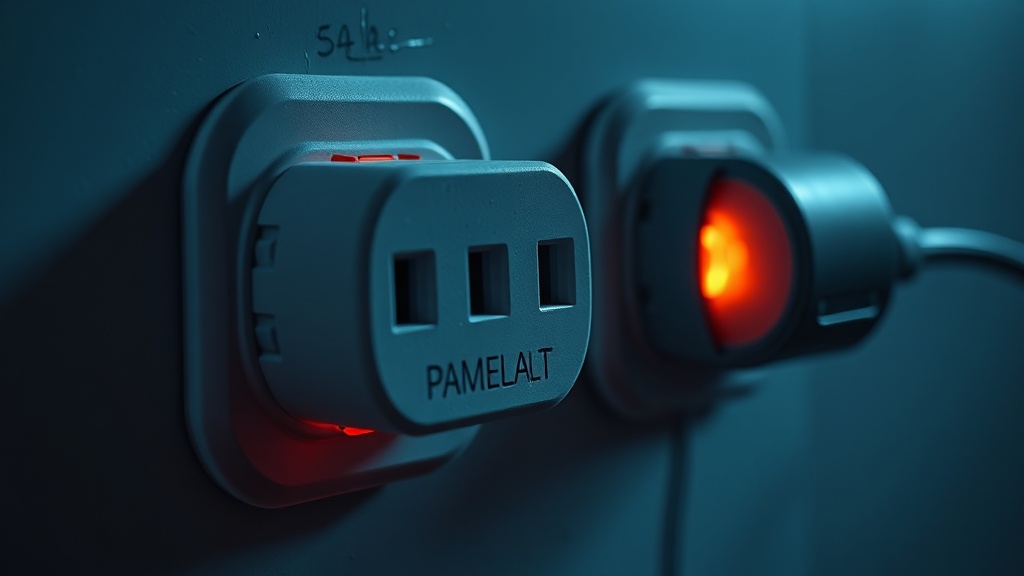
Energy monitoring smart plugs have become a cornerstone of modern smart home automation — devices designed to track real-time electricity consumption while delivering remote switching capabilities. Yet a growing number of homeowners and integrators are discovering a troubling paradox: the very plugs marketed for high-load monitoring are melting, scorching outlet faces, or triggering breakers when pushed toward their rated 15-amp ceiling. This guide dissects the engineering realities behind that failure pattern, explains the safety standards your hardware must meet, and provides actionable guidance for building a monitoring system that stays safe under sustained load.
The Technical Foundation of Smart Home Energy Monitoring
Energy monitoring smart plugs use internal shunt resistors or dedicated power-monitoring integrated circuits (ICs) to translate real-time current and voltage into actionable digital data — but adding that sensing layer also introduces thermal complexity that cheap hardware routinely fails to manage.
At the heart of every capable monitoring plug is a shunt resistor — a precision low-resistance component placed in series with the load circuit. As current flows through the shunt, a proportional millivolt drop is sampled by an analog-to-digital converter and processed by a microcontroller, which then broadcasts consumption data to a cloud platform or local hub. Higher-end devices replace the discrete shunt with a dedicated power-monitoring IC such as the Microchip MCP39F521 or the HLKG BL0937, both capable of sub-1% measurement accuracy across a broad load range.
The engineering trade-off is significant. Every additional active component inside the plug housing generates its own heat. When you layer a Wi-Fi or Zigbee radio module, a switching-mode power supply, a relay coil, and a precision shunt into a casing no larger than a standard outlet adapter, thermal management becomes a genuine design challenge. Budget manufacturers often cut corners on heatsinking, PCB copper weight, and relay contact quality — all of which accelerate thermal degradation under load.
According to the electrical engineering principles documented on Wikipedia, even a low-resistance shunt dissipates power proportional to the square of the current passing through it (P = I²R). At 15 amps through a 5-milliohm shunt, that is 1.125 watts of continuous heat generated in a component the size of a postage stamp — entirely inside a sealed plastic enclosure. Scale that across a relay with degraded contacts and a marginal PCB trace width, and you have a recipe for localized thermal runaway.
Real-time monitoring also empowers homeowners to identify vampire loads — appliances that draw meaningful standby power even when switched off. A gaming console, a plasma TV, or an older cable box can consume 10–30 watts perpetually, contributing to both energy waste and cumulative thermal stress on any monitoring device that remains energized 24/7. Identifying and eliminating vampire loads is one of the highest-ROI actions available in a smart home energy strategy, and exploring dedicated smart home strategy resources can help you build a systematic approach to finding them.
Why 15A-Rated Plugs Still Overheat and Melt
A 15A rating describes a plug’s peak intermittent capacity, not its safe continuous operating ceiling — sustained loads at or near that figure rapidly degrade relay contacts, elevate internal temperatures, and can melt housing plastics rated only for short-duration peaks.
The distinction between a rated maximum and a safe continuous operating point is one of the most misunderstood concepts in residential electrical integration. Most consumer-grade smart plugs carry a 15-amp label, but that number reflects a short-duration test condition, not a figure you should sustain for hours on end. Thermal stress accumulates with time, and the components most vulnerable to it are the relay contacts that physically switch load power.
Poor contact resistance at plug terminals is a primary cause of localized heating. When a relay’s silver-alloy contacts begin to pit or oxidize — a process accelerated by repetitive switching and inrush current from motor loads — their resistance rises. Per Ohm’s Law, higher resistance at the same current means more heat. At 12–15 amps, even a modest increase of 5 milliohms in contact resistance can add several watts of localized heat directly to the relay body. With no airflow inside a sealed plug enclosure, that heat has nowhere to go but into the surrounding PCB, wiring, and housing plastic.
“Thermal failures in smart plugs almost always originate at the point of highest resistance in the current path — typically a degraded relay contact or an undersized terminal connection — not at the sensing components themselves.”
— CEDIA Integration Best Practices, Load Calculation Guidelines
The situation is further compounded by inductive loads. Space heaters, portable air conditioners, and power tools draw large inrush currents at startup — sometimes 3–6 times their steady-state amperage. A plug relay not rated for inductive switching can sustain contact arc damage on every power cycle, progressively worsening its contact resistance over weeks of use until visible thermal damage appears.
Applying the 80% Rule: CEDIA’s Load Calculation Standard
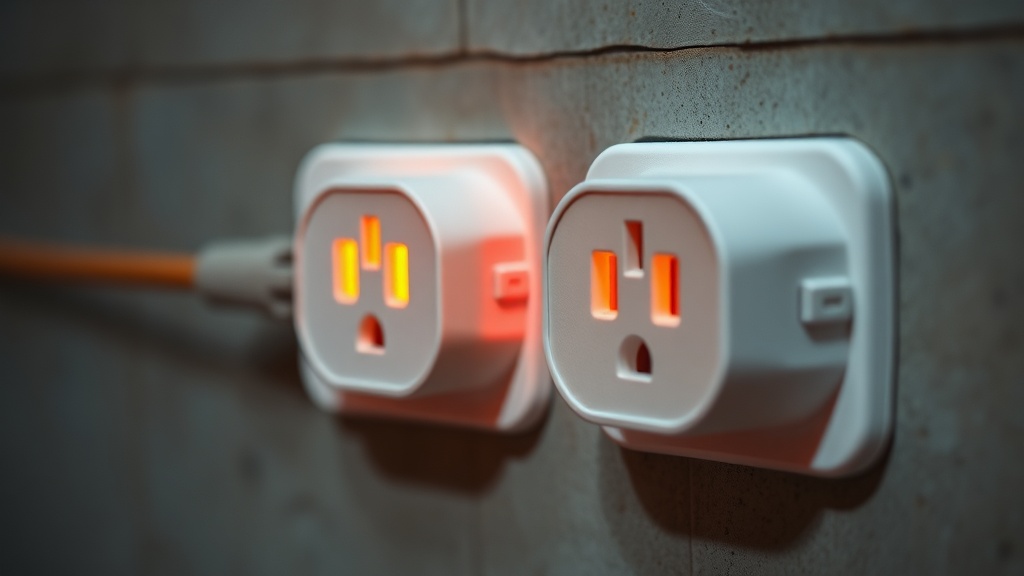
CEDIA’s professional integration standards mandate that continuous electrical loads must never exceed 80% of a device’s rated capacity — for a 15A smart plug, that means capping sustained load at 12 amps (approximately 1,440 watts at 120V) to preserve hardware longevity and prevent thermal failure.
The 80% continuous load rule originates from the National Electrical Code (NEC) Article 210.20(A), which requires circuit breakers and conductors carrying continuous loads to be sized at 125% of that load — effectively the same as saying the load should not exceed 80% of rated capacity. CEDIA integrators apply this same principle at the device level. A plug rated for 15A should see no more than 12A of continuous current; at 120V, that ceiling is 1,440 watts.
This matters enormously when homeowners connect space heaters (typically 1,500W), portable air conditioners (900–1,440W), or electric kettles (1,200–1,500W) to monitoring plugs. Those loads sit precisely at or above the 1,440W safe continuous threshold. Running a 1,500W space heater through a consumer smart plug for 8 hours a day is not monitoring energy consumption — it is accelerating hardware failure.
Professional integrators solve this with a two-tier strategy. For true high-load monitoring, whole-circuit energy monitors such as the Emporia Vue Gen 3 or the Sense Energy Monitor are installed directly at the breaker panel, eliminating the thermal vulnerability of an in-line plug entirely. For outlet-level monitoring of moderate loads (under 10A continuous), only plugs with proven relay ratings, adequate PCB copper weight, and independent safety certifications should be deployed.
Safety Certifications and Thermal Protection Mechanisms
The UL 60730-1 standard sets mandatory safety and operational requirements for automatic electrical controls in smart home devices — plugs bearing this certification have undergone rigorous thermal endurance and overload testing that uncertified products simply have not.
The UL 60730-1 standard, administered by UL Solutions, governs automatic electrical controls including the relay and switching mechanisms inside smart plugs. Compliance requires devices to demonstrate safe operation under abnormal conditions — including locked-rotor motor loads, short-circuit events, and sustained overtemperature scenarios. Devices that carry this marking have been subjected to the UL 60730-1 endurance and temperature testing protocol, which validates their performance across thousands of switching cycles.
Beyond certification, professional-grade smart plugs integrate multiple layers of active thermal protection:
- Thermal Cutoff (TCO) Switch: A one-time or resettable bimetallic element that physically opens the circuit if internal temperatures exceed a preset threshold — typically 85°C to 105°C depending on housing materials. Unlike software-based protection, a TCO operates independently of firmware, providing a hardware-level safety backstop.
- Overcurrent Relay Trip Logic: Firmware-based current monitoring that commands the relay to open when sustained current exceeds a programmed threshold. Better implementations use sliding-window averaging to distinguish genuine overloads from brief inrush events, reducing nuisance trips without compromising protection.
- High-Precision Shunt Calibration: Production-calibrated shunts with measurement accuracy within ±1% ensure that the overcurrent protection logic responds to actual current levels, not drifted sensor readings. Uncalibrated devices may under-read by 10–15%, meaning they report safe current levels while the relay is already thermally stressed.
- MOV (Metal Oxide Varistor) Surge Suppression: Clamps voltage transients from lightning or switching events that would otherwise arc across relay contacts and accelerate contact degradation.
Comparative Analysis: Consumer vs. Professional-Grade Monitoring Plugs
The performance gap between consumer-grade and professional-grade smart plugs is most stark at high continuous loads — where relay contact quality, PCB copper weight, and thermal protection architecture determine whether the device survives months of real-world use.
| Feature | Consumer-Grade Plug (e.g., Amazon Basics, Gosund) |
Professional-Grade Plug (e.g., Kasa EP25, Enbrighten Z-Wave) |
|---|---|---|
| Rated Current | 15A (peak/intermittent) | 15A (continuous-rated relay) |
| Safe Continuous Load | ~8–10A practical ceiling | 12A (80% of rated) |
| Sensing Technology | Basic shunt, ±5–10% accuracy | Calibrated IC, ±1% accuracy |
| Thermal Cutoff | Often absent or firmware-only | Hardware TCO + firmware layer |
| Safety Certification | ETL or self-certified | UL 60730-1 Listed |
| Relay Contact Rating | Resistive load only | Resistive + inductive rated |
| Recommended Use Case | Lamps, phone chargers, fans | HVAC accessories, heaters, AV equipment |
| Approximate Price Range | $8–$18 | $20–$45 |
Best Practices for Safe High-Load Smart Home Integration
Safe integration of smart monitoring hardware at high current levels requires matching device specifications to actual load profiles, respecting the 80% continuous load rule, and selecting certified hardware with hardware-level thermal protection — not just firmware safeguards.
As a CEDIA Certified Professional Designer, my site assessment workflow always includes a load calculation worksheet before any smart plug is specified. For each outlet location, I document the connected appliance’s rated wattage, its duty cycle (intermittent vs. continuous), and its load type (resistive vs. inductive). Only after that analysis does hardware selection begin.
For loads above 1,200 watts that must be monitored at the outlet level, I specify plugs with continuous-duty relay ratings verified by the manufacturer — not just the nameplate amperage. I also require UL 60730-1 listing as a minimum, not a preference. The cost difference between a $12 consumer plug and a $35 certified professional plug is trivial relative to the cost of a damaged outlet, a scorched wall plate, or a house fire investigation.
Homeowners who want outlet-level data on truly high-wattage appliances (above 1,440W) should strongly consider repositioning those loads to a smart circuit breaker solution — a smart breaker such as the Leviton Load Center or Siemens SPEEDFAX with energy management capability. These solutions monitor current at the breaker level, where the conductors and contacts are properly sized for sustained high-amperage duty, eliminating the thermal bottleneck of a wall-plug adapter entirely.
Finally, conduct a quarterly visual inspection of all smart plugs connected to loads above 800 watts. Any discoloration of the plug body, the outlet face, or the wall plate is an immediate red flag. Discoloration indicates that sustained elevated temperatures have been occurring — and that the device should be replaced before it progresses to a failure event.
Frequently Asked Questions
Why does my smart plug feel warm even with a low-wattage device plugged in?
All smart plugs generate some heat internally because they contain an always-on switching-mode power supply, a Wi-Fi or Zigbee radio, and a microcontroller — all drawing a small continuous current regardless of the connected load. A warm exterior (40–50°C) is normal. A hot plug that is uncomfortable to touch briefly (above 60°C surface temperature) indicates either an overloaded relay, degraded contact resistance, or insufficient internal thermal design, and the device should be replaced.
Can I safely plug a 1,500W space heater into a 15A smart plug?
A 1,500W load at 120V draws 12.5 amps — which exceeds the CEDIA-recommended 80% continuous load ceiling of 12 amps (1,440W) for a 15A-rated device. While a high-quality, UL 60730-1 Listed smart plug with a continuous-duty inductive relay can handle this load safely for short periods, sustained 8-hour daily operation is not recommended. For permanent space heater monitoring, install a smart circuit breaker or panel-level energy monitor instead of relying on an in-line plug adapter.
What does the UL 60730-1 certification actually verify for smart plugs?
UL 60730-1 is an international safety standard for automatic electrical controls used in household and similar applications. For smart plugs, compliance testing verifies safe operation under normal and abnormal load conditions, relay endurance across thousands of switching cycles, dielectric strength of internal insulation, temperature rise limits under sustained load, and performance under fault scenarios such as locked-rotor motor loads. A plug bearing this listing has been independently tested to these criteria — it is not a self-declaration by the manufacturer.
References
- UL Solutions: UL 60730-1 Standard for Safety — Automatic Electrical Controls for Household and Similar Use
- CEDIA: Global Association for the Home Technology Industry — Integration Standards and Best Practices
- U.S. Department of Energy: Home Energy Monitoring Systems — Consumer Guidance
- Wikipedia: Electrical Shunt — Principles of Current Measurement via Shunt Resistors
- NFPA 70: National Electrical Code — Article 210.20(A) Continuous Load Overcurrent Protection Requirements