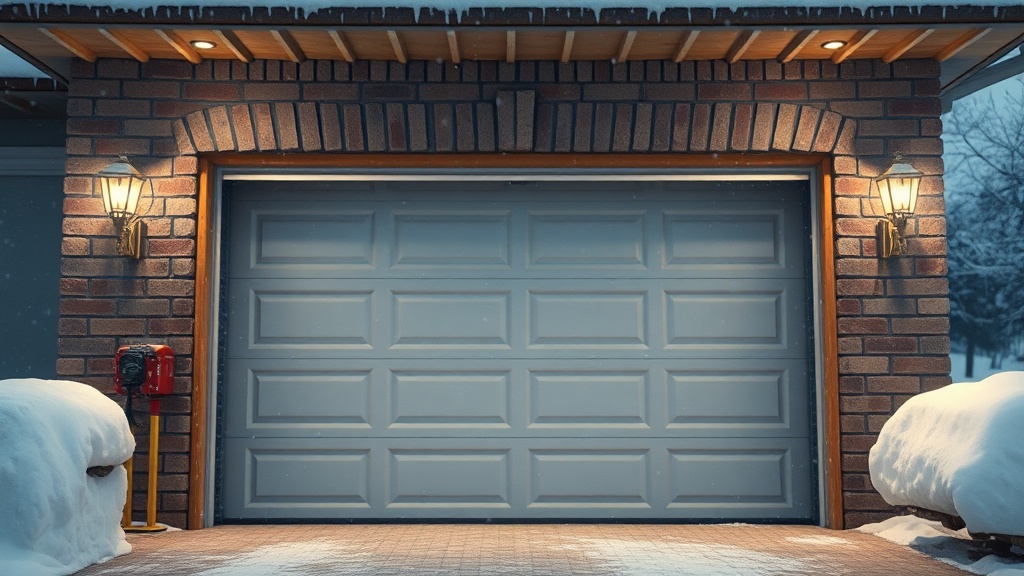
Fixing Phantom Garage Door Openings During Extreme Temperature Drops
I used to tell every homeowner the same thing when their garage door opened by itself in the cold: “Just replace the remote batteries.” I said it confidently, repeatedly, and I was wrong more often than I care to admit. That advice fixes maybe 15% of cold-weather phantom opening cases. The other 85%? Those require understanding what’s actually happening inside your opener, your sensors, and your smart home ecosystem when temperatures crash below freezing.
Fixing phantom garage door openings during extreme temperature drops is one of those problems that looks simple on the surface and turns into a rabbit hole fast. I’ve walked through this exact issue in dozens of homes — and what I’ve found is that most homeowners (and plenty of technicians) are treating symptoms instead of root causes.
Let’s fix that.
Why Cold Weather Makes Garage Doors Act Possessed
Extreme temperature drops create a cascade of electrical and mechanical failures inside garage door systems. Understanding which component is failing — and why — is the only way to stop phantom openings for good.
Under the hood, your garage door opener is a collection of components that all have different thermal tolerances. When ambient temperatures plunge — think single digits Fahrenheit or sustained sub-freezing conditions — multiple things happen simultaneously.
First, the logic board inside the opener unit contracts slightly. On older units with worn circuit traces, this can cause intermittent electrical continuity issues. The board essentially sends ghost signals to the drive motor.
Second, the safety sensors — those little infrared eyes mounted near the floor on each side of the door — have plastic lenses that contract in the cold. When the lens geometry shifts even a fraction of a millimeter, the beam alignment drifts. A misaligned sensor can trigger the door to reverse or, on certain opener models, to cycle open as a “safety response.”
Third — and this one surprises people — the lubricant on your trolley mechanism thickens in cold weather. A door that’s fighting through stiff grease creates more resistance than the opener expects. Some smart openers interpret unexpected resistance as an obstruction and initiate a reverse-open sequence.
The failure mode here is compounding: it’s rarely one thing. It’s usually three marginal components all pushed past their tolerance on the same night the temperature drops twenty degrees in four hours.
The Remote and Wall Button Are Usually Not the Problem
Blaming the remote is the most common oversimplification in cold-weather garage door diagnosis. In most phantom opening cases, the remote is entirely innocent.
Here’s my honest critique of the most popular advice you’ll find online: “Wrap your remote in a warm cloth” or “bring your remote inside overnight” are not solutions. They’re superstitions dressed up as tips.
If your door is opening at 3 AM when your remote is sitting on a kitchen counter, the remote is physically incapable of being the culprit. Yet I still see forums recommending remote replacement as a first step for phantom openings. That’s not diagnosis — that’s guessing.
The wall button is similarly misdiagnosed. A shorted wall button can absolutely cause phantom activations, but it doesn’t care about temperature. If your wall button shorted, it would act up in July too. When the problem is strictly cold-weather triggered, look elsewhere.
To be precise: if the phantom openings correlate directly with temperature drops — not random timing, not after you’ve been pressing the remote — you’re dealing with a sensor, board, or mechanical issue. Full stop.
Diagnosing the Real Culprits: A Step-by-Step Cold-Weather Check
Systematic diagnosis beats random part replacement every time. These steps isolate the cold-weather failure point before you spend a dollar on parts or labor.
Start your diagnosis the night it’s cold, not the next morning when the garage has warmed up. That’s when the symptoms are live.
Step 1: Check the sensor alignment indicator lights. Most modern openers have LED indicators on the sensors — typically green on the receiver, amber on the sender. If either light is blinking or off when temperatures drop, you’ve found your misalignment. This is usually a DIY fix: loosen the sensor wing nuts, realign the beam until both lights are solid, and retighten.
Step 2: Inspect the sensor wiring. Cold makes plastic wire insulation brittle. Look for micro-cracks where wires connect to sensors or where they’re stapled to door trim. A hairline crack that closes in summer opens in the cold. Cost to repair: $15-40 in parts if DIY, $75-150 with a technician.
Step 3: Test the logic board temperature sensitivity. Disconnect the wall button and all remotes from the opener’s frequency band (change the frequency or use the lock button on most units). If phantom openings stop, you’ve confirmed an RF interference or remote issue. If they continue with everything disconnected, the logic board is the suspect.
Step 4: Re-lubricate the trolley and track. Switch from a standard grease to a low-temperature silicone lubricant rated to -40°F. Products like Garage Door Lube Spray (white lithium in a spray can) or dedicated silicone gels work well. Cost: $8-15 at any hardware store. This one is always DIY-friendly.
Cold-Weather Phantom Opening: Fix Comparison Table
Not every fix costs the same — or requires the same skill level. This table helps you prioritize where to start based on your situation.
| Root Cause | DIY Friendly? | Estimated Cost | Fix Complexity |
|---|---|---|---|
| Sensor misalignment (cold contraction) | Yes | $0 (just adjustment) | Low |
| Cracked sensor wiring | Yes (with basic tools) | $15–$150 | Low–Medium |
| Thickened trolley lubricant | Yes | $8–$15 | Low |
| Failing logic board | No — hire a pro | $80–$300 (parts + labor) | High |
| RF interference (smart home conflict) | Depends on setup | $0–$200 | Medium |
| Worn or cracked door weatherstripping (ice bond triggering reverse) | Yes | $20–$80 | Low–Medium |
Smart Home Integration and the Cold-Weather Phantom Opening Problem
Smart garage door openers add a layer of complexity that can make phantom openings harder to trace — especially when automation rules interact with temperature-triggered sensor glitches.
From a systems perspective, this is where things get genuinely interesting — and genuinely frustrating. If you’ve integrated your garage door with a smart home platform like Google Home, Amazon Alexa, Apple HomeKit, or a dedicated hub like SmartThings, you now have software automation in the mix.
I’ve seen automation rules set up by well-meaning homeowners that trigger the garage door to open when the “home” geofence is entered. In cold weather, when phone GPS accuracy drifts — which it does more frequently in low-signal winter conditions — a device can appear to leave and re-enter the geofence while the phone is sitting on a nightstand.
The fix here is to add a time restriction to your geofence automation: only allow the geofence to trigger between 6 AM and 10 PM, for example. This is a smart home automation strategy that prevents a lot of late-night surprises without disabling the convenience feature entirely.
Also worth reviewing: if you use a smart opener brand like Chamberlain myQ, LiftMaster, or Meross, check whether any firmware updates have pushed since the cold snap started. Temperature-related bugs in smart opener firmware are more common than manufacturers admit, and an update can sometimes resolve phantom behavior without any hardware intervention.
For deeper troubleshooting of your connected home ecosystem, our smart home strategy resources cover integration edge cases in detail — including how to audit automation rules that may be interacting badly with cold-weather sensor errors.
When You Genuinely Need a Professional
Some cold-weather garage door problems are DIY-friendly. Others involve high-tension springs and live electrical components that can cause serious injury without proper training.
Be honest with yourself about your comfort level. Logic board replacement requires working around live 120V circuits inside the opener unit. That’s a pro job. Garage door spring repair is absolutely a pro job — torsion springs store enough energy to cause severe injury when handled incorrectly, and cold metal is more brittle and unpredictable.
If you’ve worked through the sensor check, the lubrication swap, and the automation audit — and you’re still getting phantom openings — call a technician. A qualified pro can test the logic board with a multimeter, check for micro-fractures in the spring assembly, and evaluate whether the opener unit has simply reached end-of-life. Most quality openers last 10-15 years; in harsh climate zones, that window shortens.
Expect to pay $75-150 for a diagnostic visit, and $200-500 for opener replacement depending on horsepower rating and smart features. The tradeoff is a few hundred dollars now versus a door that opens uninvited at 2 AM in January — which is also a security and heating cost issue, not just an inconvenience.
Prevention: What to Do Before the Next Cold Snap
Cold-weather preparation done in fall saves hours of troubleshooting in January. These maintenance steps are mostly DIY and cost under $50 total.
The best time to prevent phantom openings is early October, before the first hard freeze.
Apply low-temperature silicone lubricant to all moving parts: hinges, rollers, springs (light coat only), and the trolley rail. Check sensor alignment and wipe the lens faces clean with a dry cloth. Inspect all wiring for brittleness or exposed copper. Test the down-force sensitivity setting on your opener — most openers have a force adjustment dial inside the unit cover that controls how much resistance triggers a reversal.
This matters because a properly calibrated opener set for summer conditions may be too sensitive for the added friction of winter operation. A slight clockwise turn on the down-force dial (consult your manual — every brand labels this differently) can eliminate resistance-triggered phantom openings entirely.
Budget about $30-50 for a full pre-winter maintenance kit: lubricant, replacement sensor wire if yours looks worn, and fresh weatherstripping for the bottom door seal. Two hours of work in October is worth it.
Frequently Asked Questions
Why does my garage door open by itself only when it’s very cold outside?
Cold temperatures cause physical contraction in sensor lenses, logic board components, and lubricants — all of which can trigger false signals. The problem is temperature-specific because these components operate within acceptable tolerances in warm conditions but fail at temperature extremes. Sensor misalignment from lens contraction is the most common cold-specific cause.
Can a smart home automation rule cause phantom garage door openings in winter?
Yes, absolutely. Geofence automations are particularly vulnerable in winter because GPS accuracy degrades in cold conditions and can cause false “arrival” triggers. Check any automation rules that include garage door actions and add time-of-day restrictions. Also review recent firmware updates on your smart opener — these occasionally introduce temperature-related bugs.
Is fixing a phantom garage door opening a DIY job or do I need a professional?
It depends on the root cause. Sensor realignment, lubrication changes, and automation rule edits are all DIY-friendly and cost little to nothing. Logic board replacement, spring inspection, and electrical wiring repairs inside the opener unit are pro jobs. When in doubt — especially around springs — hire a certified technician. The cost of a diagnostic visit is far less than an injury or a full replacement job caused by amateur spring work.
What most people get wrong about phantom garage door openings is that they look for one cause. The real insight is this: in cold weather, your garage door system doesn’t fail at a single point — it fails at the intersection of three or four marginal components that each held on just fine until temperatures made all their tolerances worse at the same time. Solve the compounding problem, not the individual symptom, and the phantom openings stop for good.